A shop that became a community resource
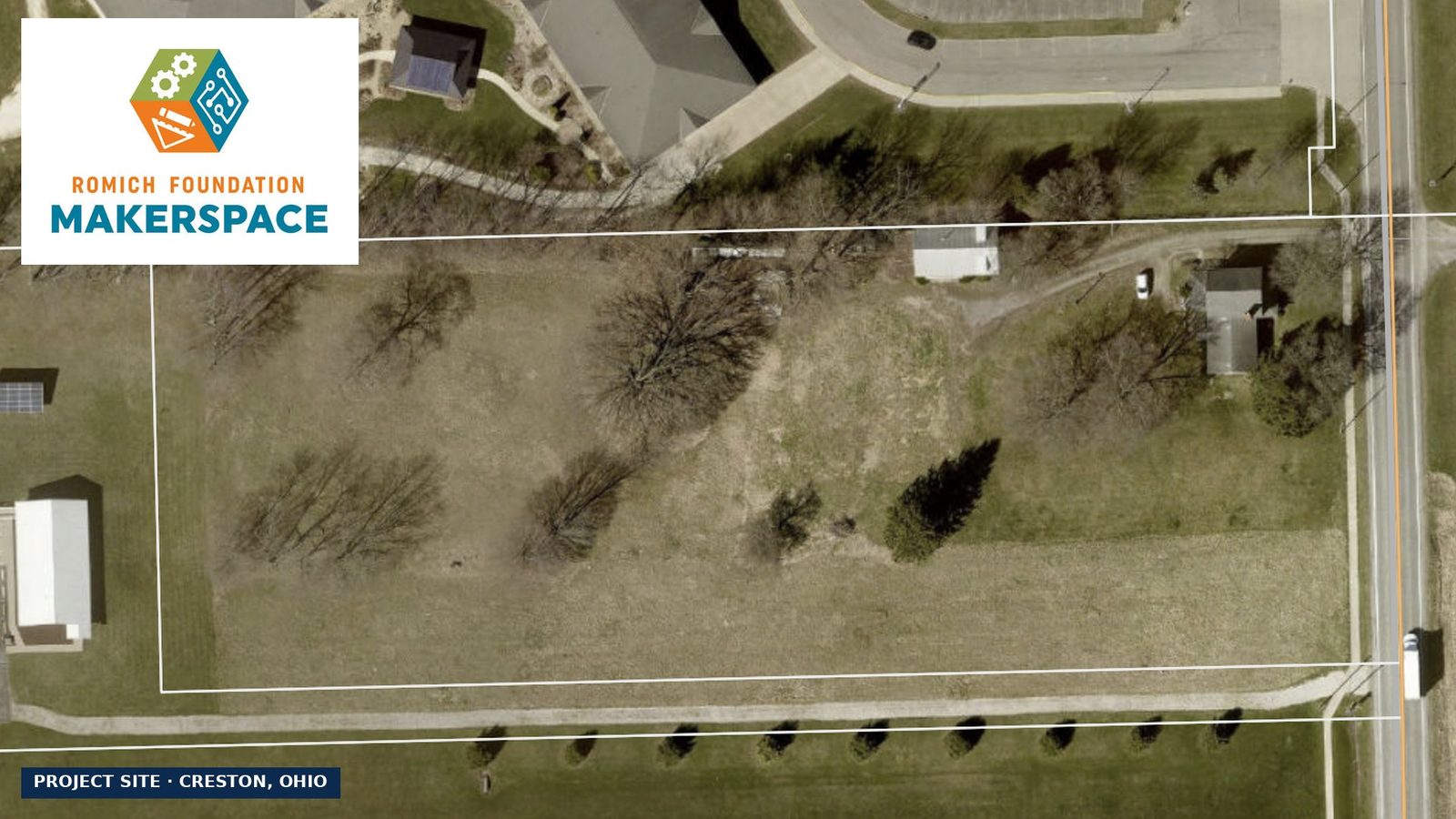
The Romich Foundation Makerspace sits on a farm on Cleveland Road in Creston. The building was once Barry Romich's grandfather's garage, later his father's farm shop. Over the years it became Barry's personal workshop. Then people started asking him to make things, and most of those people were from local nonprofits.
So the shop became a makerspace, run under the Romich Foundation. Today it has laser engravers, 3D printers, a CNC router, sublimation and large-format printing, electronics benches, and woodworking and metalworking tools. More than 40% of the Foundation's giving now flows through it.
The part that surprises people: nobody pays
Nonprofits that come to the makerspace don't get a bill. The work is part of the Foundation's charitable giving. If you aren't a nonprofit, you're asked to donate to one instead, often Joyful Café.
A typical visit starts at the conference table. A nonprofit explains what it needs: fundraising items, nametags, signage, recognition pieces. The team brainstorms how to make it. Barry's view is simple: the makerspace can give more value to a community than a check can.
Ideas and resources are worth little without action.
The people
Barry Romich, P.E. co-founded Prentke Romich Company in 1966, a maker of communication devices for people with disabilities. When it came time to transition ownership, he and his partners converted the company to an employee-owned ESOP. It is now PRC-Saltillo, with about 450 employees worldwide. Most of the value of Barry's shares went to the Foundation he started in 2005.
Izy Scheibe started at the makerspace part-time as a sophomore at Norwayne High School. By graduation, the work had grown enough that she was offered a full-time job. She now manages the makerspace and supervises several Norwayne students who work there part-time. Barry describes it plainly: he has ideas and resources, and that combination is worthless without action. Izy is the action.
More than a workshop
School and homeschool groups visit for STEAM tours and leave with a keychain or mug they helped engrave. Schantz MakerSpace holds its monthly Maker Mondays there. The Lions Club and the Wayne County Community Youth Foundation meet there. The team has also helped libraries, schools, and community centers across the region start makerspaces of their own. One current goal: a 3D printer in every county library system in Ohio.
Why we're writing about it
Lammers C&D is the owner's representative for the Foundation's new building. This journal will walk you through that project as it happens: the decisions, the trade-offs, the team, and the technologies. If you've ever wondered what it takes to build something meaningful, follow along.
Before any design starts, get clear on who your building serves and what they do there every day. The Makerspace team can describe its users, visitors, and daily routine in detail, and that makes every decision that follows easier.